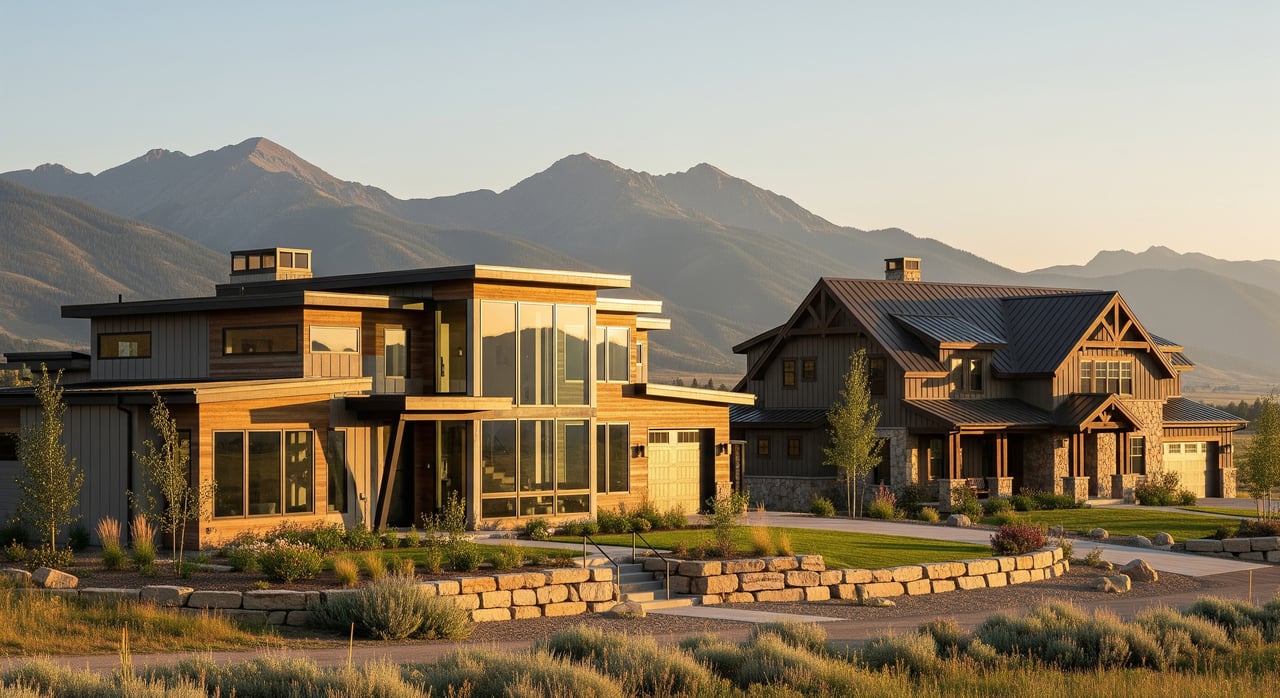
Trying to decide between a brand-new build and a well-kept resale in Harvest Creek? You are not alone. With steady demand and limited supply in the Bozeman area, timing, costs, and confidence all matter. In this guide, you will learn how new construction and resale homes compare on timelines, inspections, warranties, customization, financing, and neighborhood due diligence specific to Harvest Creek. Let’s dive in.
New construction: what to expect
New construction in Harvest Creek follows the broader Bozeman market, where growth and permitting capacity shape availability and timing. Your experience will depend on the builder’s schedule, subdivision phase, and the city or county’s inspection and utility timelines. Plan for a longer runway than a typical resale and build in buffer time.
Timelines and schedule risk
- Spec homes often run 3 to 9 months from permit to move-in, depending on how far along the build is when you sign.
- Production homes where you choose finishes from a plan often take 6 to 12 months.
- Custom builds commonly run 9 to 18 months.
Local factors can stretch schedules, including winter weather, inspection backlogs, subcontractor availability, supply-chain delays for items like windows or HVAC units, and utility or road work tied to the subdivision phase. Expect multiple municipal inspections through foundation, framing and rough-ins, insulation, and final. You will need a certificate of occupancy before you can move in, and small punch-list items or incomplete site work can delay it. Ask your builder to include target milestone dates in writing and spell out remedies if deadlines slip.
Warranties and inspections
Most builders use a common “1-2-10” warranty format: one year for workmanship, two years for systems like HVAC, plumbing, and electrical, and ten years for major structural components. Coverage varies, so get the exact warranty in writing and ask whether it is backed by a third party or only by the builder.
Municipal inspections focus on code compliance, not cosmetics or performance details. It is smart to hire your own inspector for key stages. Aim for a pre-drywall inspection, a pre-final inspection, and an 11th-month inspection before warranty expiration. Consider specialty testing like radon, HVAC balancing, water quality where relevant, and airtightness if energy performance is a priority. Document everything in writing to support warranty claims later.
Customization and costs
The appeal of new construction is choice. You can often select floor plans, finishes, and systems, but upgrades can add up. Builders commonly use allowances for items like countertops, flooring, and fixtures. If your selections exceed the allowance, your final cost rises. Some upgrades carry higher markups than if you sourced them after closing. Budget a realistic contingency and get a clear change-order process with approval steps and caps.
New homes frequently include higher-efficiency systems and tighter building envelopes. Ask for specifics such as SEER ratings for HVAC, insulation R-values, window performance, and any blower-door results. Do not assume performance without documentation.
Financing and appraisal
New construction can require different financing. Construction or construction-to-permanent loans have draw schedules and documentation that differ from standard mortgages. Appraisals for new builds rely on local comparables, which can be challenging if nearby sales are older or less upgraded. In fast-moving markets, appraisal gaps can occur. Builders sometimes offer incentives like closing cost credits or limited price concessions. Compare the total package rather than just list price.
Resale homes: benefits and trade-offs
A resale home often delivers speed and predictability. In a market with persistent demand, being able to close sooner can make life simpler, especially if you are relocating.
Condition and inspections
You should still order a full home inspection that covers the roof, structure, mechanical systems, and insulation. For older homes, specialty inspections are common where relevant, such as radon, sewer scope or septic evaluation, pest or termite assessment, chimney or woodstove checks, and targeted mold evaluations when indicated. Seller disclosures can be helpful, but they do not replace a thorough inspection.
Cost and value
Resale homes sometimes include features that are expensive to add later, such as mature landscaping, established trees, or finished spaces like a basement. You may trade a little customization for immediate character and a settled streetscape. Because repairs or updates might be needed over time, factor likely replacements like roofs, furnaces, or water heaters into your total cost of ownership.
Financing and appraisal
Resales typically use conventional, FHA, or VA loans. Appraisals rely on a broader set of comparables and are usually more straightforward. Negotiation can vary with inventory and demand. In tighter conditions, flexibility on price or repairs may be limited. Look at the whole deal, including any credits for inspection items, rather than only the list price.
Neighborhood due diligence for Harvest Creek
Harvest Creek is part of the greater Bozeman and Gallatin County market, so subdivision details matter. Confirm the recorded plats, HOA structure, and any phasing or infrastructure items before you decide.
- HOA and covenants: Verify whether there is an HOA, the fee amount, and what it covers. Review architectural controls, exterior change rules, fence standards, accessory structure guidelines, and any rental restrictions.
- Infrastructure and utilities: Confirm whether the home is on city water and sewer or if any lots rely on private wells and septic systems. Ask who maintains roads and common areas during build-out and post-completion. Review stormwater plans.
- Phasing and future plans: Check plats and the developer’s master plan for future phases, road alignments, and the timing of any parks or trails.
- Schools and services: Verify school district boundaries and note proximity to essential services like grocery, medical care, and commuter routes to downtown Bozeman and Montana State University.
- Commute and traffic: Newer areas on the edge of town can add drive time. Ask about any planned arterials or traffic mitigation.
- Environmental checks: Review FEMA flood maps and local floodplain overlays, check wildfire risk guidance and defensible space recommendations, and verify any well or septic requirements where relevant. Radon testing is advisable for both new and resale homes in this region.
Which path is right for you
Choose new construction if you prioritize design control, energy performance, and lower early maintenance, and you can accommodate a longer and less predictable timeline. It suits buyers who want modern layouts and are comfortable making structured selections and waiting for completion.
Choose resale if you value a faster move, mature landscaping, and an established neighborhood feel. It is a strong fit if you prefer to see and touch the exact home you are buying and want a simpler financing path with fewer moving parts.
In either case, the best choice aligns with your timing, budget, and priorities. A clear plan for inspections, financing, and neighborhood due diligence helps you move forward with confidence.
Buyer checklists
New construction checklist
- Obtain the builder’s written warranty and ask about third-party backing.
- Hire a private inspector for pre-drywall, pre-final, and 11th-month inspections.
- Confirm permit records, inspection cadence, and certificate of occupancy steps.
- Get a detailed allowance and change-order process with approval caps.
- Budget for landscaping and any off-site or public improvements tied to the phase.
- Ask for milestone dates in the contract and remedies if timelines slip.
Resale checklist
- Order a full home inspection and add specialty inspections where indicated.
- Request seller disclosures and, when available, historic utility bills.
- Review HOA documents, covenants, and any recent or upcoming assessments.
- Map likely near-term replacements and factor them into your budget.
Any buyer in Harvest Creek
- Verify school boundaries and your commute to work or recreation.
- Check floodplain maps, wildfire risk, radon potential, and utility capacity.
- Speak with a local lender early about loan type, appraisal expectations, and any construction-loan requirements if you consider new builds.
Timeline planning tips
- Build buffer time into your move. If you are relocating, consider a short-term rental or a rent-back strategy to bridge possible delays.
- Put dates in writing for key milestones such as permit issuance, foundation, framing, and lock-up. Require change-order documentation.
- Coordinate early with movers, insurers, and utility providers. Delays can cascade if you cannot pivot quickly.
- Keep a running punch list and address items before closing or within clearly defined warranty windows.
How Bronson helps you compare options
You deserve clear data, practical timelines, and a calm plan from contract to keys. With an economics background and steady transaction history across Bozeman, Bronson pairs market analysis with concierge support. He helps you compare net costs after incentives, plan inspections at the right stages, review warranties, and navigate construction or conventional financing. You get organized communication, a trusted vendor network, and advocacy shaped by local experience in neighborhood developments like Harvest Creek.
Ready to weigh new construction against a resale with a clear, local strategy? Connect with Bronson Neff to talk through your timing, budget, and next steps.
FAQs
How long does a new home build take in Harvest Creek?
- Timelines vary by builder and phase, but many production homes run 6 to 12 months, with local weather, inspections, subcontractor schedules, and utility tie-ins affecting completion.
Should I hire a private inspector for a new build in Bozeman?
- Yes, schedule third-party inspections at pre-drywall, pre-final, and around the 11th month to document issues for warranty claims beyond code-only municipal inspections.
What does a typical builder warranty cover on new construction?
- Many builders use a 1-2-10 format that commonly covers workmanship for one year, major systems for two years, and structural elements for ten years, with specifics set in the written warranty.
How do new build upgrades compare to features in a resale?
- New build upgrades often run through allowances and change orders, which can add cost, while resales may include pricey features like mature landscaping or finished spaces at purchase.
Are there HOA rules in Harvest Creek I should review before buying?
- Confirm whether an HOA exists, its fees, and rules for exterior changes, fences, accessory structures, and rentals, and review any architectural controls before you commit.
Is radon a concern for homes in Bozeman, new or resale?
- Yes, the region can have elevated radon potential, so testing is advisable for both new and existing homes and mitigation can be addressed if levels are high.
